Handsome Little Devil
First Impressions: Playful, Not Precious
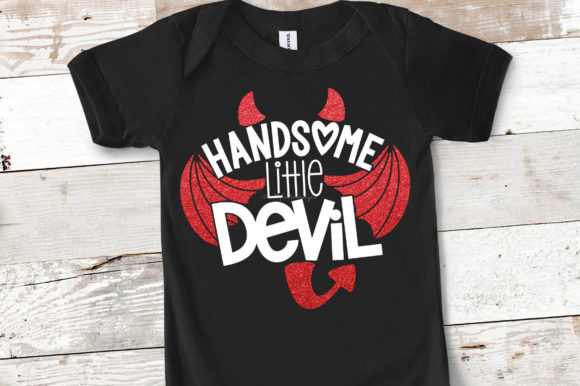
When Handsome Little Devil popped up in my design queue, I paused—not because it’s flashy or technically complex, but because it *feels* like something a real person would stitch for a real child. It’s hand-lettered with warmth and slight irregularity, not sterile perfection. The devil horns, tiny wings, and coiled tail aren’t spooky—they’re cheeky, compact, and full of personality. There’s no aggressive edge here; just a wink, a grin, and soft visual rhythm. As a machine embroidery design, it leans into charm over complexity: modest height, open letter spacing, and intentional negative space around key elements. That tells me it was made for readability at small-to-medium scales—not as a wall-hanging centerpiece, but as a joyful accent on a baby onesie, a toddler sweatshirt, or a holiday tote bag.
Where It Shines (and Where It Needs Care)
I recently tested Handsome Little Devil on a medium-weight cotton canvas tote—exactly the kind I stock for local boutique clients. Stitched in matte black thread on natural beige fabric, it landed perfectly: legible, expressive, and unmistakably handmade. The lettering held its shape without distortion, and the horn/wing/tail motifs read clearly even from three feet away. That’s the sweet spot: custom apparel, embroidered patch applications, nursery decor, and holiday gifts where warmth matters more than wow-factor.
It also works beautifully on baby embroidery projects—think organic cotton onesies or gauzy swaddle blankets—because the design avoids dense fill stitches and tight corners that snag or pucker delicate weaves. On a lightweight jersey t-shirt? Proceed with caution. The hand-lettered flow relies on clean edges, so stretchy fabric demands extra stabilizer and possibly reduced stitch density to prevent shadowing or thread breakage. Same goes for dark fabric: test contrast early. What reads sweetly in charcoal on cream may vanish on navy unless you adjust thread color or add underlay.
Caps and curved surfaces are trickier. The design’s horizontal balance makes it less ideal for front-panel cap embroidery unless centered precisely—and even then, the wings and tail could distort near the crown seam. For hats, I’d recommend using only the quote portion (without wings/horns) or repositioning elements to follow the curve. Likewise, avoid cramming Handsome Little Devil into hoops smaller than 4x4 inches. Those little horns and tail tips need breathing room; stitching them too tightly risks lost detail and brittle satin-stitch edges.
Real-World Fit for Makers & Sellers
If you’re an Etsy seller or small shop owner building seasonal collections, Handsome Little Devil is low-risk, high-charm inventory. It pairs naturally with Halloween-themed bundles—think “Spooky & Sweet” digital embroidery file packs—or as a standalone printable mockup for social media listings. Customers respond well to its tone: it’s festive without being cliché, gender-neutral, and age-flexible (works for toddlers *and* teens who appreciate irony). As a craft business asset, it supports brand consistency when paired with complementary designs—say, a matching “Wickedly Cute” border or coordinating bat motif.
But don’t assume it’s plug-and-play for every product. On tea towels or pillow covers with heavy texture, some fine line work (like wing outlines or tail curls) may soften or blur. On layered garments—like reversible aprons or double-knit blankets—check how the backside looks. Running stitch details might show through lighter layers, affecting the finished product’s polish. And if you’re planning commercial embroidery for resale, confirm licensing terms before listing physical items. This isn’t just a Graphics download—it’s a design asset that carries weight in your shop’s reputation.
Practical Designer Notes Before You Stitch
- Always test first: Run Handsome Little Devil on scrap fabric matching your final project’s weight and stretch.
- Check thread color contrast: Try it in both light and dark thread on your target fabric—even subtle differences affect perceived cuteness vs. clarity.
- Review stitch density: If your machine struggles with tight fills or long satin runs, consider simplifying wing or horn areas manually—or reach out to the designer for alternate versions.
- Confirm hoop size compatibility: Measure the design’s widest point. If it’s close to your hoop’s max, leave margin for hooping ease and registration accuracy.
- Inspect small details: Zoom in on the tip of the tail and inner horn curves. Are they single running stitches or multi-pass satin? That affects durability on high-wash items like baby clothes.
- Use proper stabilizer: Tear-away works for stable wovens; cut-away adds longevity for knits or heirloom pieces.
- Test black-and-white mockups: This reveals whether contrast holds up across lighting conditions—critical for online listings.
- Verify commercial use rights: Since this lives in the Crafts category as a Graphics file, confirm whether resale of stitched items or redistribution of the embroidery file is permitted.
Final Thought: Charm With Intention
Handsome Little Devil doesn’t try to be everything. It’s not a technical showcase, nor is it meant for large-scale branding. It’s a focused, human-scaled piece of embroidery storytelling—one that earns smiles, not stares. When used thoughtfully—in the right fabric, at the right scale, with attention to thread and stabilization—it elevates a simple tote bag into a personalized gift, turns a plain sweatshirt into a conversation starter, and gives small business owners a reliable, seasonally relevant design asset. That’s the quiet power of well-intended design: not flash, but feeling. And in handmade product development, that feeling is what customers remember—and come back for.